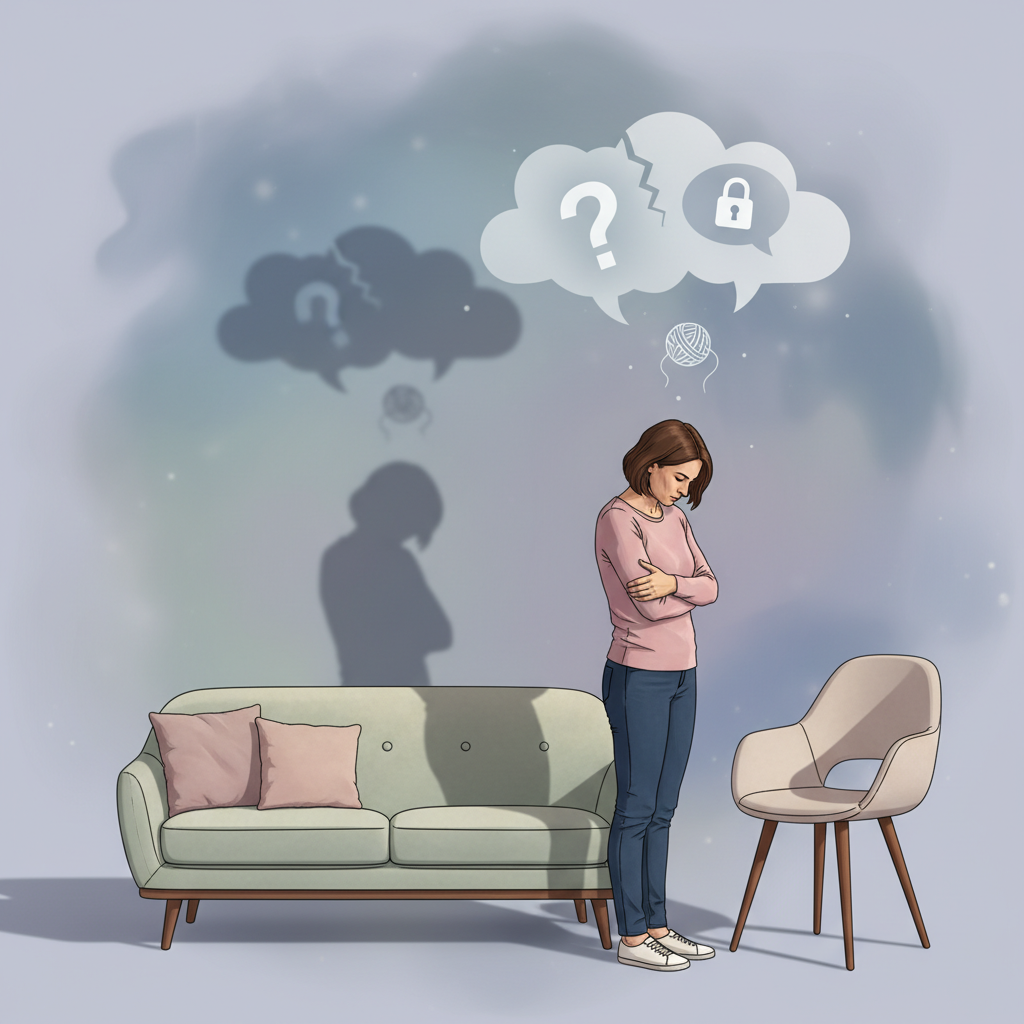

Feeling like your body is in constant emergency mode can be exhausting. Therapy for panic attacks is designed to help you understand what is happening inside you, calm your nervous system, and gradually reclaim parts of your life that panic has started to control.
Instead of trying to “power through” or avoid situations that trigger you, therapy gives you practical tools and a safe space to work with the fear, not around it. Over time, that can be life changing.
Understanding what panic attacks really are
A panic attack is a sudden surge of intense fear or discomfort that peaks within minutes. Your heart may race, your breathing can feel tight or shallow, and you might feel dizzy, detached, or convinced that something terrible is about to happen.
Many people worry they are having a heart attack, going crazy, or losing control. Medical professionals consider panic attacks very distressing but not physically dangerous in themselves. Psychotherapy, particularly cognitive behavioral therapy, is considered an effective first choice treatment for panic attacks and panic disorder because it helps you learn that panic symptoms are not dangerous and gradually reduces your fear response through controlled exposure to symptoms [1].
If you notice frequent and excessive anxiety, fear, or panic that interferes with your daily life or feels out of proportion to the situation, this can be a sign that professional support such as anxiety therapy for adults could help [2].
How therapy for panic attacks works
Therapy is not about “talking yourself out of” panic. Instead, it helps you understand and change the cycle that keeps panic going: your thoughts, your behaviors, your physical sensations, and your emotions.
CBT and the panic cycle
Most modern therapy for panic attacks uses Cognitive Behavioral Therapy, or CBT. The NHS Inform panic self help guide explains that CBT helps you understand the link between your thoughts, behaviors, feelings, and physical symptoms so you can gain more control and reduce the effects of panic [3].
You might work with your therapist to:
- Map out what typically happens before, during, and after a panic attack
- Identify thoughts like “I am going to faint” or “I will embarrass myself” that fuel the fear
- Notice what you do to try to feel safe, such as leaving situations, checking your pulse, or avoiding exercise
By understanding this cycle in detail, you can begin to interrupt it at multiple points, not just when the panic feels overwhelming.
Changing thoughts that fuel panic
Therapy helps you gently question and update unhelpful beliefs such as:
- “If my heart races, it means something is medically wrong.”
- “If I panic in public, everyone will judge me.”
- “Once panic starts, there is nothing I can do.”
In CBT, you and your therapist look at the evidence for and against these thoughts and develop more balanced, realistic alternatives. This is not about “positive thinking.” It is about accurate thinking that reflects how panic actually works in your body.
Over time, this can reduce the “panic about panicking” that often turns a wave of anxiety into a full attack. Coping statements that remind you that panic is unpleasant but not harmful can help break this negative cycle and lessen panic severity [3].
Working with behaviors that keep panic going
Understandably, you probably do a lot to try to prevent or escape panic. This can include:
- Avoiding places like stores, public transport, or meetings
- Always sitting near exits or carrying “safety objects”
- Limiting exercise or caffeine because they raise your heart rate
These strategies might make you feel safer in the short term, but they can keep your brain convinced that panic is dangerous and that you cannot cope. The NHS Inform guide notes that avoidance and safety behaviors can maintain or worsen panic attacks and recommends behavioral experiments instead, where you gently confront feared situations without safety behaviors to build confidence and reduce anxiety in the long term [3].
In therapy, you do not rush into your worst fears. You and your therapist plan gradual, manageable steps so that your confidence increases at a pace that feels challenging but safe enough.
Calming your body during panic
When your body is surging with adrenaline, it can be hard to think clearly. A key part of therapy for panic attacks is learning tools that calm your body so you can stay grounded enough to use everything else you are learning.
Breathing and relaxation skills
Controlled breathing and relaxation exercises can reduce the intensity of anxiety and panic, especially when you practice them regularly, not only when you are already distressed [3].
Your therapist may help you learn skills like:
- Slow, diaphragmatic breathing with a gentle, steady rhythm
- Progressive muscle relaxation to release tension in the body
- Brief “reset” practices you can use at work, in the car, or in public
These techniques are often reinforced in coping skills therapy for anxiety, which focuses specifically on practical tools you can draw on in everyday life.
Grounding in the present moment
When panic hits, your attention usually locks onto internal sensations and worst case scenarios. Grounding techniques help you shift attention back to the present moment and your surroundings.
The NHS Inform guide highlights methods such as the 5,4,3,2,1 technique, where you name 5 things you can see, 4 you can feel, 3 you can hear, 2 you can smell, and 1 you can taste. This kind of sensory grounding can reduce overwhelming anxiety and panic symptoms by bringing your focus out of your head and back to the external environment [3].
Your therapist may personalize grounding practices so they fit your lifestyle and the situations where panic is most likely to appear.
Many people describe these skills as the “bridge” that lets them move from just surviving panic to actually working with it in therapy.
Facing feared sensations and situations, safely
Although it might sound counterintuitive, one of the most powerful parts of therapy for panic attacks is learning to face the feelings and situations you have been avoiding.
Interoceptive exposure: making sensations less scary
If you have had panic attacks, you may be very sensitive to bodily sensations like a racing heart or shortness of breath. Interoceptive exposure, a technique in CBT, helps you practice noticing these sensations in a controlled way until they become less frightening.
With guidance, you might briefly:
- Run in place or climb stairs to increase your heart rate
- Breathe through a straw to simulate shortness of breath
- Spin in a chair to produce a feeling of dizziness
The goal is not to trigger a full panic attack. It is to teach your brain that these sensations are uncomfortable but not dangerous, which can weaken the fear response over time [1].
Gradual exposure to real life triggers
Alongside working with sensations, you and your therapist may create a step by step plan to face situations you have been avoiding. This could include:
- Standing in a short line at a store
- Attending a brief work meeting
- Riding one stop on public transport
- Going to a social event for a limited time
You agree on clear goals, coping tools you will use, and how you will review the experience afterward. Over time, this kind of work can open up parts of your life that panic has been restricting, from travel and social plans to career opportunities.
How therapy supports your whole life, not just panic
Panic rarely exists in isolation. You might also be dealing with chronic stress, burnout, perfectionism, or ongoing worry. Therapy can help you connect the dots between these patterns and your panic symptoms.
Connecting panic with stress and burnout
Ongoing stress can make your nervous system more reactive and more vulnerable to panic. If you are carrying heavy responsibilities at work or home, it may feel as if you are always on alert.
Support such as therapy for chronic stress, work stress therapy, or therapy for burnout adults can be integrated with panic focused treatment. You can explore:
- The pressures and expectations that keep you overextended
- Difficulty setting boundaries or saying no
- How exhaustion, sleep issues, and stress feed into anxiety and panic
As you address stress and burnout, panic often becomes less frequent and less intense because your nervous system has more chance to reset.
Untangling anxiety, overthinking, and high functioning patterns
If you tend to overanalyze every situation or feel anxious even when everything looks fine from the outside, it is common for panic attacks to appear “out of nowhere.”
Therapy such as overthinking anxiety therapy, high functioning anxiety therapy, or broader therapy for anxiety can help you:
- Recognize patterns of chronic worry and mental “what if” loops
- Notice how self criticism and high standards keep your body in fight or flight
- Practice more flexible, compassionate ways of thinking and responding
By calming ongoing anxiety and overthinking, you reduce the background “fuel” that can flare into sudden panic.
Strengthening emotional regulation skills
Panic can leave you feeling out of control of your emotions. Support like emotional regulation therapy adults or more general stress and anxiety counseling teaches you how to:
- Notice emotional shifts earlier, before they escalate
- Use specific tools to down regulate intense fear or overwhelm
- Respond to your feelings without judging or fighting them
These skills support you far beyond panic, improving your relationships, decision making, and day to day wellbeing.
When medication is part of the plan
While therapy is central, some people benefit from combining it with medication, especially if panic attacks are frequent, severe, or connected with depression.
According to the Mayo Clinic and Cleveland Clinic, psychotherapy, particularly CBT, and medications are very effective treatments for panic attacks and panic disorder, with treatment duration depending on severity and response to therapy [4]. Medications often include antidepressants, anti anxiety drugs, and sometimes beta blockers to manage physical symptoms and reduce attack frequency [5].
It can take several weeks to notice the full effect of medication and sometimes your prescriber may need to adjust the dose or type to find what works best for you [1]. Some dietary supplements and herbal products have been studied for panic, but their safety and effectiveness are not well established and they can interact with medications, so it is important to speak with a doctor before trying them [1].
Therapy remains central because it helps you build long term skills and reduce the fear of panic itself, whether or not you use medication as part of your treatment.
What to expect over time
Panic attacks can feel so intense that it is easy to worry nothing will help. Yet research and clinical experience consistently show that many people see meaningful improvement with therapy.
The Mayo Clinic notes that therapy results may take several weeks to appear, and significant symptom reduction or resolution often occurs within several months, with occasional maintenance sessions to prevent recurrences [1]. The Cleveland Clinic also reports that with appropriate therapy and medication, most individuals improve, and that early treatment makes panic easier to manage [6].
Here is a simplified picture of how progress can feel, although your path will be unique:
- Early sessions: Learning about panic, mapping your patterns, feeling some relief simply from understanding what is happening.
- Skill building phase: Practicing breathing, grounding, and thought based tools, starting small behavioral changes, possibly still having panic attacks but feeling a bit more equipped.
- Exposure and integration: Gradually facing sensations and situations, regaining activities you had been avoiding, noticing fewer or shorter attacks.
- Consolidation: Using skills more automatically, experiencing much less fear of panic itself, focusing more on broader life goals rather than symptom management.
Even when occasional setbacks occur, you will have a clearer roadmap for how to respond.
Knowing when it is time to seek help
You might consider starting therapy for panic attacks if you notice any of the following:
- You live in fear of the next panic attack and plan your life around avoiding triggers
- You have stopped doing activities, going places, or taking opportunities because you are afraid of panicking
- Your own strategies, such as avoidance or constant self monitoring, are not working anymore
- Panic or anxiety is affecting your relationships, work, or health
- You notice increasing use of alcohol, substances, or other numbing behaviors to cope
Without support, panic can worsen over time and may develop into panic disorder or specific phobias, which is why professional help is recommended even if you do not have a formal diagnosis yet [1]. Early intervention makes therapy more straightforward and can prevent years of living in a narrow, fear based version of your life [2].
Taking the next step
If you recognize yourself in any of this, you do not have to keep managing alone. Therapy for panic attacks offers structured, evidence based support that focuses on your specific experiences, fears, and goals.
You can begin by:
- Talking with your primary care provider about your symptoms and ruling out medical causes
- Exploring specialized options such as therapy for anxiety or anxiety therapy for adults
- Considering related support like therapy for chronic stress or stress and anxiety counseling if you also feel overwhelmed or burned out
With the right help, it is possible to move from bracing for the next attack to living a fuller life where panic is no longer in charge. Therapy does not erase every uncomfortable feeling, but it can transform your relationship with fear, rebuild your confidence, and open space for the things that matter most to you.