
Understanding anxiety therapy for adults
If you live with constant worry, racing thoughts, or a body that never seems to relax, you are not alone. More than 40 million adults in the United States experience an anxiety disorder every year, which is over 18% of the population [1]. Anxiety therapy for adults is designed to help you understand what is happening in your mind and body, reduce symptoms, and build practical tools so that anxiety is no longer in control of your life.
You might already be using coping strategies like exercise, journaling, or talking with friends. These can help, but when anxiety keeps returning, starts affecting sleep, work, relationships, or your health, professional support often becomes the next important step. Therapy gives you structured, evidence-based skills and a safe, nonjudgmental place to work through patterns that are hard to change on your own.
How anxiety and chronic stress show up in adults
Anxiety and chronic stress can look very different from person to person. You may not see yourself as someone who has an “anxiety disorder,” yet still feel constantly on edge or overwhelmed. Understanding how anxiety shows up in your daily life helps you decide when therapy might be useful.
Common emotional and mental signs
You might notice:
- Persistent worry about work, money, health, or relationships, even when things are going relatively well
- Difficulty turning your mind off at night or waking up already tense
- A tendency to imagine worst case scenarios and feel prepared for disaster
- Irritability or feeling “on edge” much of the day
- Trouble concentrating, zoning out, or replaying conversations in your mind
Patterns of overthinking can be especially draining. If you recognize yourself in this, you may find it helpful to explore focused overthinking anxiety therapy that targets these looping thought cycles.
Physical symptoms of anxiety
Anxiety does not just live in your thoughts. It often shows up physically through:
- Tightness in your chest, throat, neck, or shoulders
- Headaches, stomach aches, nausea, or digestive issues
- Rapid heartbeat, shortness of breath, or dizziness
- Trouble falling or staying asleep
- Feeling restless, jittery, or unable to sit still
These symptoms can be frightening, especially if you worry they signal a serious medical problem. It is important to rule out medical causes with your doctor, but when symptoms are linked to chronic stress or anxiety, therapy can help you reduce them by calming the underlying stress response.
High functioning anxiety and burnout
Many adults appear “fine” from the outside even while anxiety is intense on the inside. You may be productive, successful, or highly responsible, yet feel exhausted, pressured, or close to burning out.
If this sounds familiar, you might benefit from:
- High functioning anxiety therapy to address perfectionism, overcommitment, and self-criticism
- Therapy for burnout adults if you feel emotionally drained, detached, or unable to recharge
These forms of anxiety are easy to dismiss because you are still managing your responsibilities, but they can quietly erode your health and quality of life over time.
When it may be time to seek therapy
There is no single “right” moment to start anxiety therapy for adults. However, certain signs suggest that your usual coping strategies are no longer enough and that structured support could make a meaningful difference.
You might consider therapy if:
- Worry, panic, or tension are present most days of the week
- Anxiety is affecting your work performance, attendance, or motivation
- You avoid situations, people, or opportunities because of fear
- You rely on substances, overwork, or numbing behaviors to cope
- Sleep, appetite, or energy levels are noticeably affected
- Physical symptoms persist even after medical issues have been ruled out
- Loved ones express concern about how stressed, withdrawn, or overwhelmed you seem
If panic symptoms are a major concern, such as sudden intense fear, racing heart, trembling, or fear of losing control, you might benefit from more targeted therapy for panic attacks as part of your overall care.
Reaching out for help does not mean your anxiety is “severe enough.” It simply means you are ready to learn new ways of responding to stress so you can live with greater ease and stability.
What happens in anxiety therapy for adults
Anxiety therapy is not just talking about your problems. It is a structured, collaborative process where you and your therapist work together to understand what fuels your anxiety and practice skills that change how you think, feel, and respond.
Assessment and goal setting
At the beginning, your therapist will typically:
- Ask about your symptoms, history, current stressors, and goals
- Explore how anxiety affects different areas of your life
- Screen for related concerns, such as depression, trauma, or substance use
- Help you identify what you most want to change
Together, you set goals that feel realistic and meaningful. These might include sleeping better, handling work pressure more calmly, reducing panic episodes, or feeling less controlled by worry.
Building coping skills and emotional regulation
Many adults arrive at therapy already using some coping tools, but these may not be enough or may no longer work in more complex situations. Therapy helps you refine and expand your skill set, so you have more options when anxiety rises.
You may work on:
- Grounding techniques to manage spikes in anxiety in the moment
- Breathing and body-based skills that calm the nervous system
- Thought strategies to slow or redirect spiraling worries
- Communication tools for setting boundaries and asking for support
- Planning and problem solving to reduce avoidable stress
If you often feel flooded by emotions or have difficulty calming down once triggered, emotional regulation therapy adults can become an important part of your work. It focuses on understanding your emotional patterns and developing reliable ways to soothe and stabilize yourself.
Over time, you build a practical toolbox of skills that you can use outside sessions. In fact, most progress happens between appointments, when you experiment with these skills in real situations.
How cognitive behavioral therapy (CBT) helps anxiety
Cognitive behavioral therapy, or CBT, is one of the most researched and effective forms of anxiety therapy for adults. CBT helps you identify unhelpful thought patterns and behaviors that maintain anxiety, then gradually replace them with more balanced thinking and healthier responses [2].
Understanding the CBT model
In CBT, you learn to notice how three elements interact:
- Thoughts: what you say to yourself
- Emotions: how you feel in response
- Behaviors: what you do or avoid
For example, if you think, “I will embarrass myself at this meeting,” you may feel anxious and avoid speaking up. That avoidance might temporarily lower anxiety, but it also reinforces the belief that you cannot handle the situation, which keeps anxiety strong.
CBT helps you:
- Identify these automatic thoughts
- Examine how accurate or helpful they are
- Test out alternative thoughts and behaviors in real life
- Learn that you can cope with discomfort and uncertainty more effectively than you assumed
Research consistently shows that CBT is a first-line treatment for many anxiety disorders, including generalized anxiety, social anxiety, panic disorder, PTSD, OCD, and specific phobias [3]. Many CBT treatment plans are relatively time limited, often around 12 to 20 sessions, which can make them feel more structured and goal focused.
Exposure therapy as a key component
A central CBT technique for anxiety is exposure therapy. Instead of avoiding what you fear, you gradually and safely face it in small, planned steps. Over time, your brain learns that the feared situations are less dangerous than they feel and that you can handle the anxiety that comes up.
Exposure can include:
- Imaginal exposure: visualizing feared situations in detail
- In vivo exposure: directly entering feared situations in real life
- Interoceptive exposure: purposely triggering physical sensations of anxiety (like a racing heart) in a safe way
Exposure therapy is especially effective for conditions such as specific phobias and OCD and often produces meaningful changes within about 10 sessions [4]. Your therapist will move at a pace that feels challenging but still manageable, so you are not overwhelmed.
CBT as a skills based, time limited approach
CBT is designed to help you become your own therapist. You learn and practice tools so that, by the end of treatment, you feel confident using them independently. Weekly sessions usually account for less than 1% of your waking hours, so much of the real change happens when you apply CBT skills in everyday life through homework like tracking anxiety triggers, practicing exposure steps, or testing new responses to stress [5].
Digital CBT programs, such as FDA cleared DaylightRx, have also shown promising results. In one clinical study, 71% of participants reported reduced worry and anxiety, 57% improved mood, and 47% better sleep [5]. These options can be a supportive complement to one-on-one therapy or, in some cases, an entry point to care.
Medication, lifestyle changes, and therapy together
For many adults, the most effective plan combines therapy with other supports. Understanding how these pieces fit together can help you make more informed choices.
Role of medication in treating anxiety
Medication does not “fix” anxiety on its own, but it can reduce symptoms enough that you are better able to benefit from therapy and daily coping strategies. Common options include:
- SSRIs and SNRIs, such as sertraline, escitalopram, or venlafaxine, often used as first-line treatments for anxiety and depression [1]
- Benzodiazepines, such as alprazolam or lorazepam, sometimes prescribed short term for acute anxiety, with attention to risks and side effects [1]
- Beta blockers like propranolol, sometimes prescribed for social or performance anxiety [1]
Medication choices depend on the type of anxiety you experience, your health history, and your preferences. Doctors and psychiatrists will usually review potential benefits, side effects, and alternatives before starting or changing medication [2].
Lifestyle changes that support therapy
Lifestyle shifts alone may not fully control an anxiety disorder, but they can significantly support your progress in therapy. Helpful changes often include:
- Regular aerobic exercise, such as walking, jogging, or cycling, several times per week
- Sleep routines that allow for consistent, sufficient rest
- Reducing or avoiding caffeine, alcohol, or other substances that worsen anxiety
- Mindfulness, relaxation training, or breathing exercises
- Time in nature, meaningful hobbies, or social connection
If you are dealing with high work pressure, work stress therapy can help you connect these lifestyle changes to concrete shifts in your schedule, boundaries, and priorities.
Complementary practices such as mindfulness, yoga, and meditation have also shown effectiveness in reducing anxiety symptoms. Mindfulness based interventions like Mindfulness Based Stress Reduction (MBSR) and Mindfulness Based Cognitive Therapy (MBCT) often result in moderate to large reductions in anxiety and depression symptoms and perform as well as standard CBT in many studies [6].
Online therapy and flexible options for adults
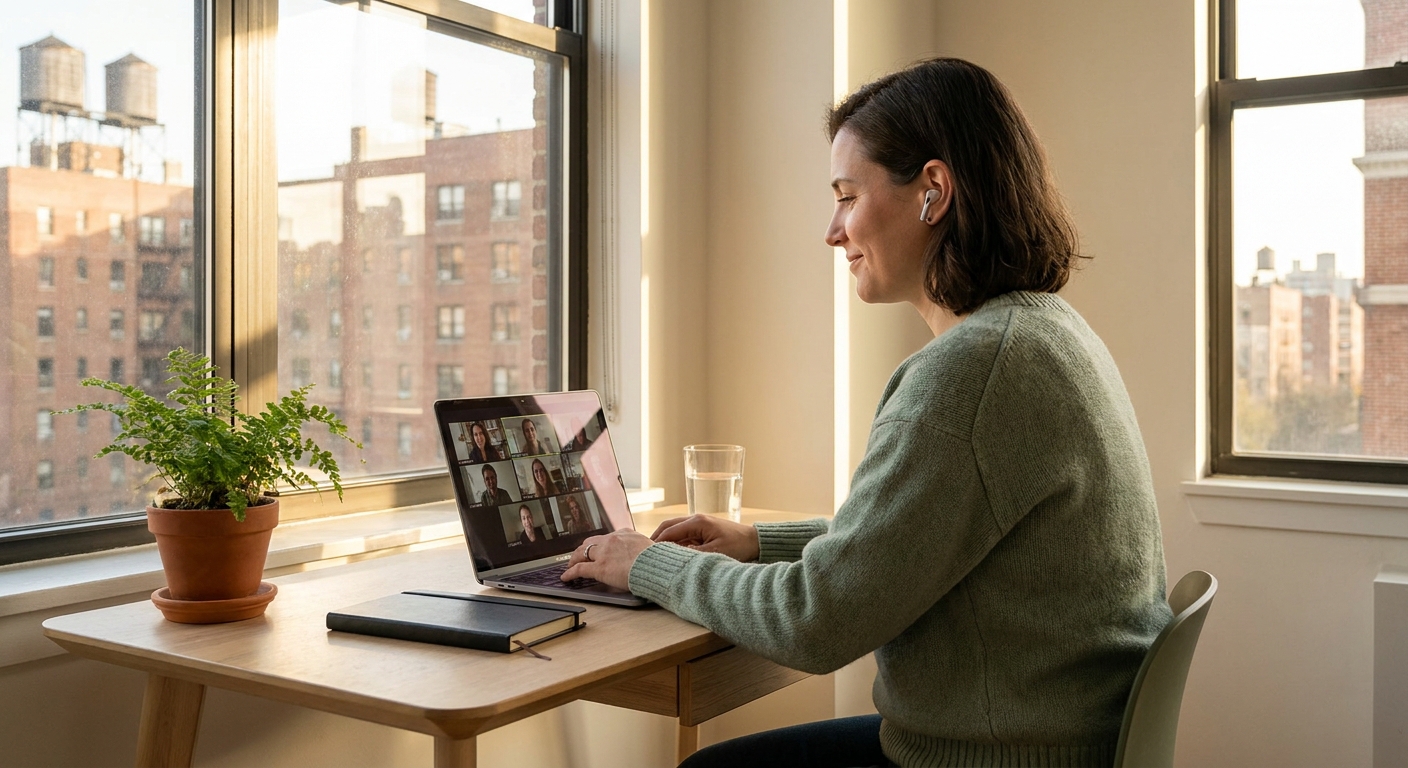
Many adults face barriers to in person therapy, such as busy schedules, transportation, health issues, or living far from providers. Online therapy can help close this gap.
Research shows that:
- Online CBT is often as effective as in person CBT for treating anxiety disorders, including social anxiety [7]
- Online therapy can reduce symptoms of depression and PTSD to a similar degree as in person therapy, with comparable satisfaction and adherence [7]
Therapists who shifted to online work during the COVID 19 pandemic often reported positive experiences overall, noting increased accessibility, time savings, and flexibility for clients, though they also described challenges like reduced nonverbal cues, privacy concerns, and occasional technical difficulties [8].
For you, this means that you may be able to:
- Attend sessions from home or a private office
- Choose from a wider range of therapists, not just those in your neighborhood
- Fit therapy into a busy schedule more easily
Online options can be a stand alone approach or combined with in person sessions, depending on your preferences and needs.
Anxiety therapy is not about eliminating all anxiety. It is about reducing unnecessary suffering, increasing your sense of control, and helping you live a life guided more by your values than by fear.
Types of support tailored to your situation
Although the core principles of anxiety treatment are similar, the focus of therapy can be tailored to the situations that affect you most.
Chronic stress and burnout
If you feel mentally drained, emotionally numb, or constantly pressured at work or home, it may be useful to explore:
- Therapy for chronic stress to address ongoing demands, role overload, and long term strain
- Therapy for burnout adults when exhaustion, cynicism, and reduced effectiveness are present
These approaches do more than teach relaxation. They help you re evaluate expectations, create boundaries, and rebuild your capacity over time.
Panic, overthinking, and daily coping
For intense, episodic fear or long periods of rumination, you might focus on:
- Therapy for panic attacks to reduce the frequency and intensity of panic and address fears about physical sensations
- Overthinking anxiety therapy to interrupt constant mental replaying and worry
- Coping skills therapy for anxiety to build a stronger everyday toolkit for managing triggers
These targeted approaches sit within the broader umbrella of therapy for anxiety and can be combined depending on what you are experiencing.
Stress and anxiety counseling
If you are not sure whether your symptoms qualify as an “anxiety disorder,” starting with stress and anxiety counseling can still be very helpful. You do not need a formal diagnosis to benefit. Counseling can help you:
- Understand your patterns
- Validate your experiences
- Learn concrete steps to feel more grounded and less overwhelmed
This can be especially supportive if you are navigating life transitions, relationship changes, or new responsibilities that have increased your stress.
What you can realistically expect from therapy
Anxiety therapy for adults is often very effective, but it is not a quick fix and it does not usually erase all anxious feelings. Instead, you can expect gradual, meaningful improvements over time.
Many adults notice:
- Fewer days dominated by worry or panic
- A more predictable ability to calm down after stress
- Less avoidance and more willingness to face challenging situations
- Improved sleep, focus, and energy
- Stronger boundaries and clearer communication in relationships
Some people experience noticeable changes within 8 to 10 sessions, especially with structured approaches like CBT, although the exact timeline depends on your history, current stressors, and how consistently you can practice skills between sessions [9].
Importantly, therapy aims to give you tools that you keep using long after sessions end. You are not just managing a crisis. You are learning new ways of relating to your thoughts, emotions, body, and life that can support you for years to come.
If anxiety, chronic stress, or burnout are making your days feel harder than they need to be, you do not have to navigate this alone. With the right combination of therapy, coping skills, and support, it is possible to calm your nervous system, think more clearly, and move toward a life that feels more steady, spacious, and aligned with what matters most to you.
References
- (Banner Health)
- (Mayo Clinic)
- (NCBI, Mayo Clinic)
- (NCBI)
- (BigHealth)
- (NCBI)
- (National Center for Health Research)
- (NCBI)
- (HelpGuide)